NXT LVL
A fitness platform that shows your progress through a personal avatar, not just numbers. Five months of venture validation with 200+ people, plus my own study of how it could cause harm.
- Role
- User research, design validation and go-to-market; solo value-sensitive design study
- Team
- Team of 5
- Context
- Imperial College London, Innovation & Entrepreneurship
- Year
- 2022
Outcome
Over five months the team tested the idea with 200+ people. All 12 gym testers joined the waitlist, and we won a £500 Imperial Advanced Hackspace grant to prototype a lifting-tempo wearable.
- people interviewed
- 120+
- people involved in user testing
- 200+
- fitness apps reviewed
- 11
- gym testers joined the waitlist
- 12 / 12
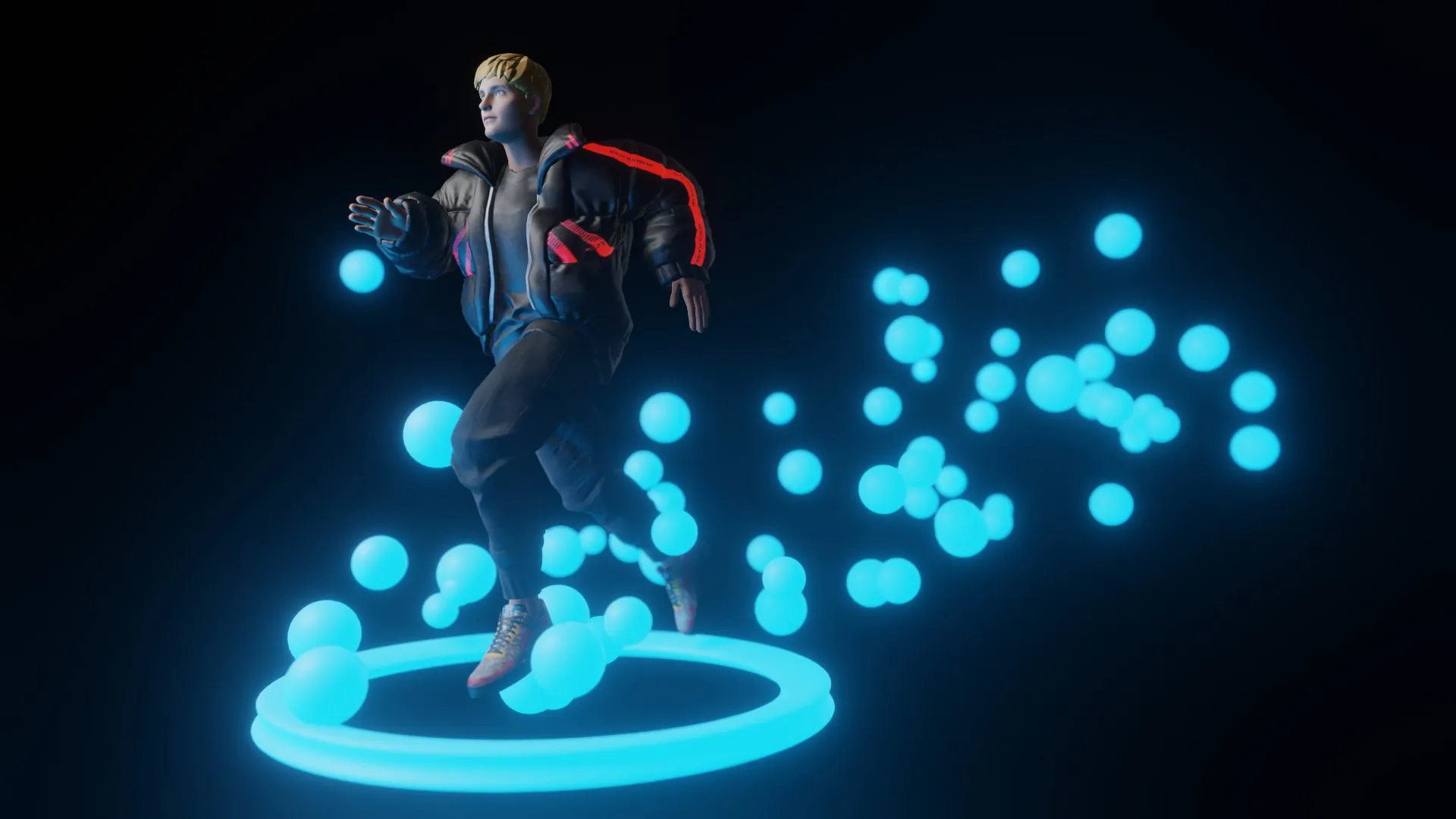
Around 20 million people in the UK don’t get the recommended amount of exercise, and negative body image is one of the things holding them back. Over the 2021–22 academic year, five of us turned that problem into a fit-tech venture and tested whether it could work.
What we found
- Interviews with 120+ people pointed to one thing again and again: people lose motivation when they can’t see progress.
- Testing 11 mainstream fitness apps showed why. They’re full of numbers but say little about how to improve.
Small changes over time are hard to notice
Progress pictures are inconsistent
Existing trackers are overly numbers-oriented
Lack of personal reflection causes demotivation
Readings from scales and fat trackers fluctuate
What we designed
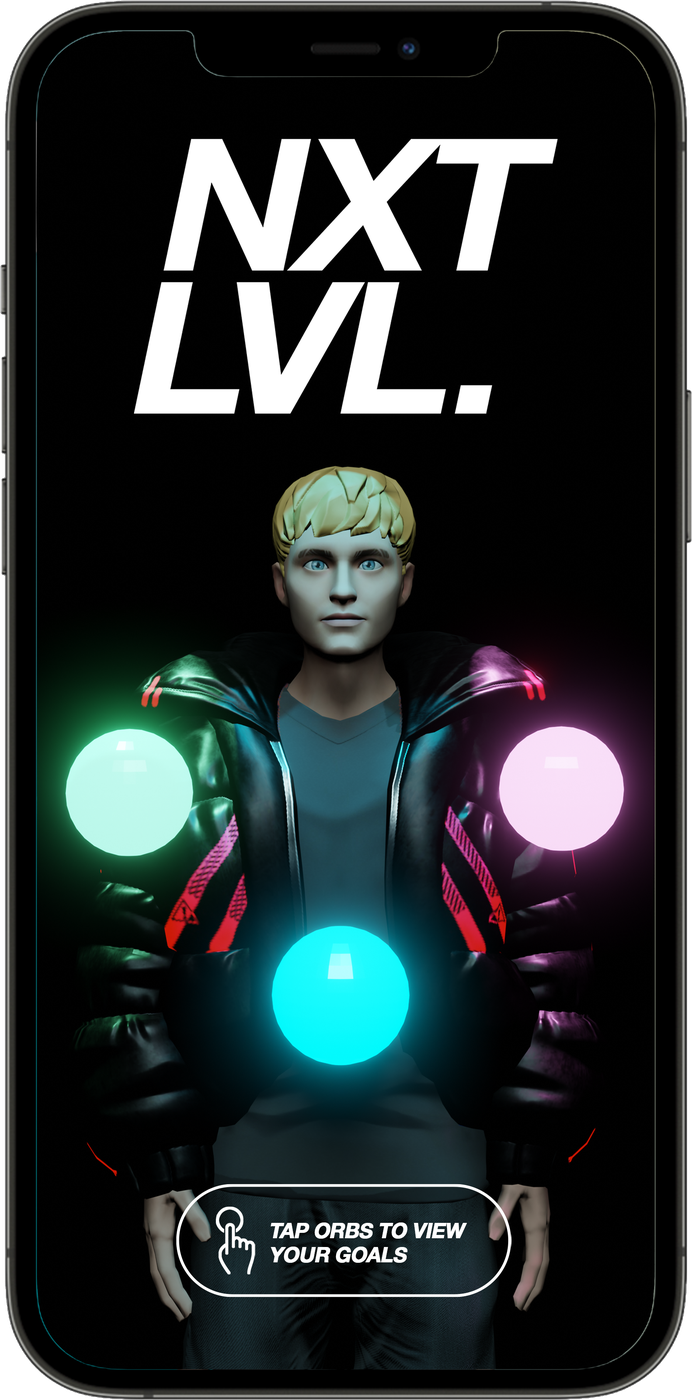
NXT LVL gives you a personal 3D avatar, made from a face scan with Ready Player Me (we interviewed the CEO of its parent company, Wolf3D). The avatar connects to your existing wearable and levels up as you hit real-world milestones. Three glowing “orbs” (Strength, Stamina and Mind) show your progress at a glance.
Scan your face
Create a personal avatar with the Ready Player Me plugin.
Connect your wearable
Works with the trackers and smartwatches people already own.
Set your goals
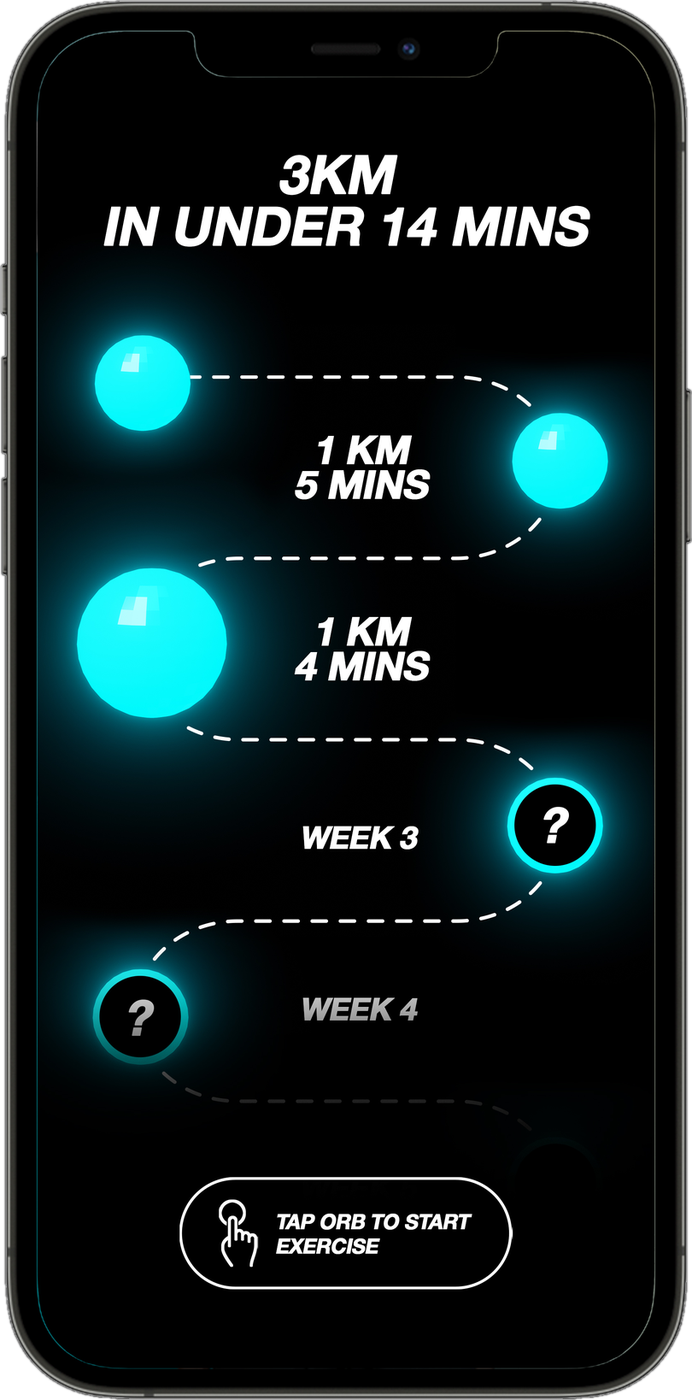
NXT LVL breaks them into achievable milestones.
Train together
Your avatar mirrors your workouts and levels up with you.
Earn rewards
Digital rewards for every milestone you complete.
See your progress
Watch the orbs light up as you get closer to your goals.
One deliberate choice: the avatar levels up without its body changing shape. The point was to reward getting fitter, not changing how you look. Testers called it “a fresh and unique way to visualise progress.”
Testing the riskiest assumptions
We tested the assumptions the venture depended on: does the avatar motivate people, would people sign up, and which rewards work?
- 30 in-person tests and 120 survey responses on an early prototype
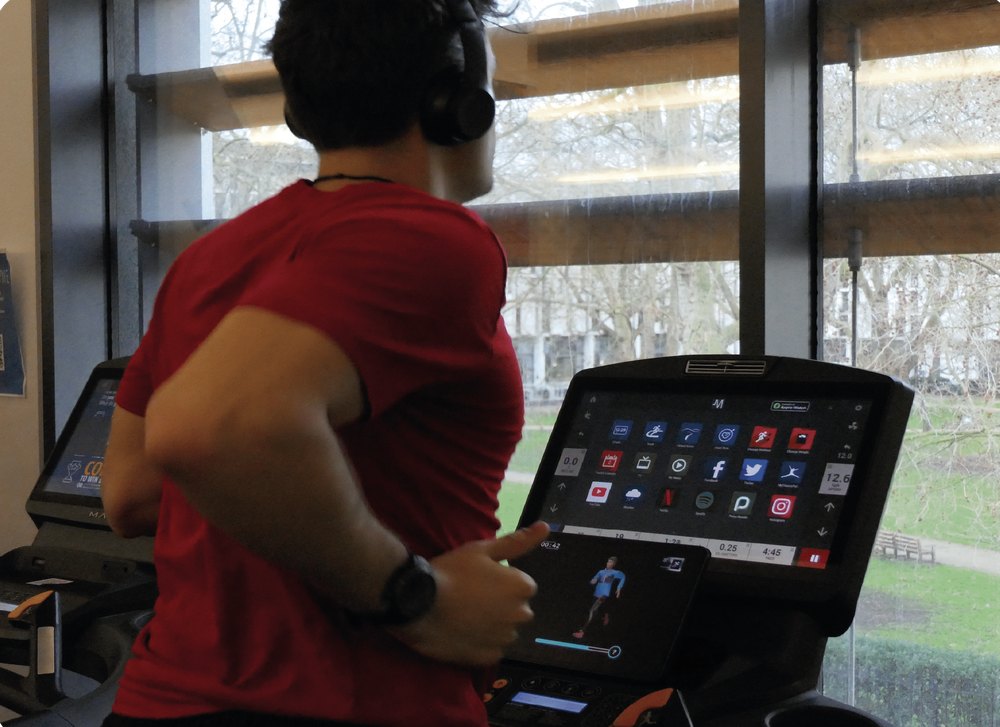
- a 3-day feature test with 12 people at Imperial’s Ethos gym. Running with the avatar plus audio was the favourite, averaging 11.2 km/h against 9.6 km/h solo, and all 12 joined the waitlist (small sample, so an early signal)
- a £500 Imperial Advanced Hackspace grant to prototype a wearable that tracks lifting tempo
- talks with Fitplan’s founders (1.4M members), and partnerships with talentZone and Project Ave in Germany
How the feature test worked
Each participant did four short treadmill runs, with breaks and interviews in between.
Control: solo run
Run for 2 minutes at a comfortable pace, with no visual aid.
Then: 20-second breakAvatar-accompanied run
A second 2-minute run, alongside their personal avatar.
Then: 20-second breakAvatar + audio motivation
The avatar run again, now with upbeat music and motivational prompts.
Then: Interview 1Avatar rewards
Run to unlock a 'milestone' reward: a digital Early Access Pass for NXT LVL.
Then: Interview 2What we assumed, tested and learned
3 days · 12 participants · Ethos gym, Imperial College London
The three assumptions we tested
We assumed that…
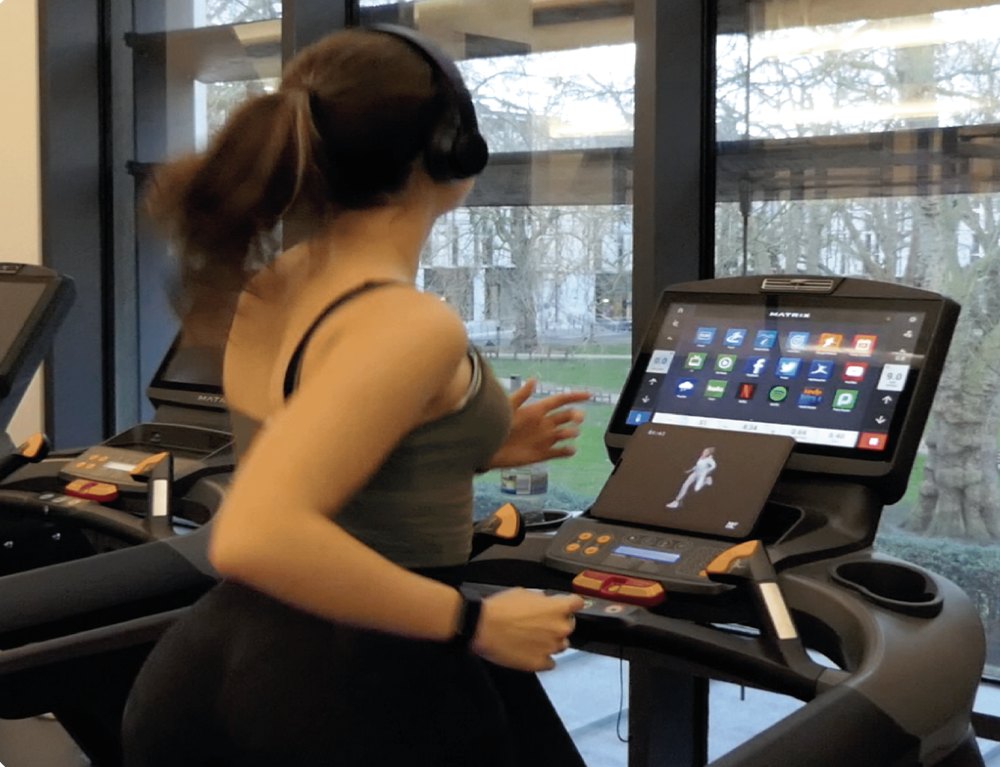
"An on-screen personalised avatar running alongside will encourage people while they exercise."
Test: Participants run while a video of their own avatar plays in front of them.
We assumed that…
"Audio motivation synced to the intensity of the run will help encourage people."
Test: Participants run while motivational audio, synced to key moments in the run, plays through headphones.
We assumed that…
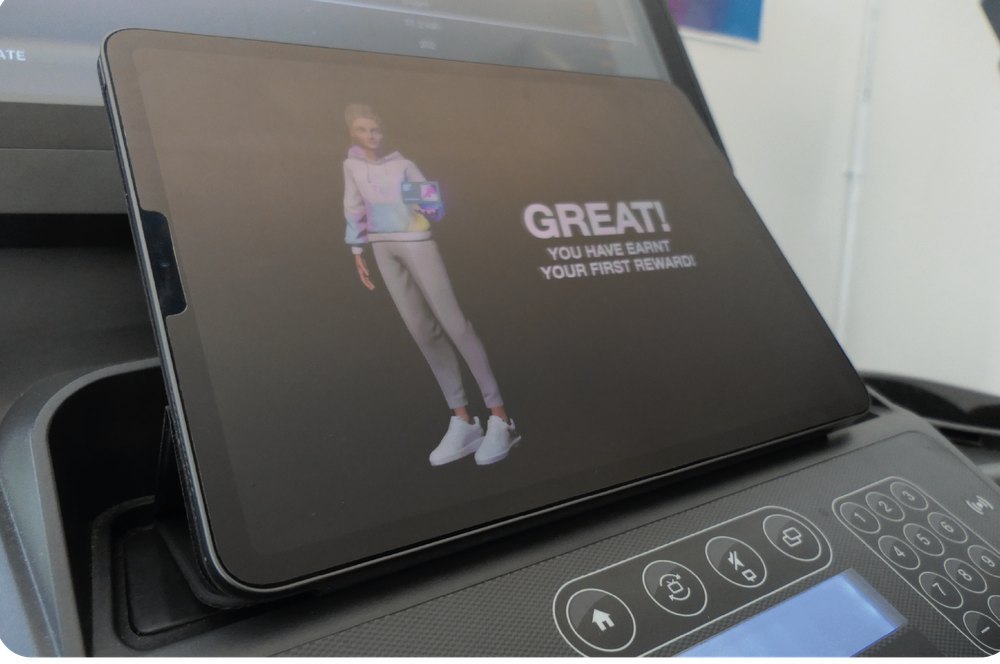
"Post-workout rewards, and seeing their avatar change, will motivate people to keep working out."
Test: Participants get a reward before running, then have to run to earn another.
Results
Most motivating features
Participant votes
| Control | Avatar | Avatar + audio | Reward |
|---|---|---|---|
| 0 | 2 | 10 | 7 |
Average motivation
Self-reported, out of 10
| Control | Avatar | Avatar + audio | Reward |
|---|---|---|---|
| 6.3 | 7.0 | 8.7 | 6.8 |
Average pace
km/h
| Control | Avatar | Avatar + audio | Reward |
|---|---|---|---|
| 9.6 | 9.8 | 11.2 | 8.4 |
What we found, and what it meant
Findings
- People enjoy working out alongside their avatar. Avatar + audio was every participant's favourite run, and it scored highest for motivation and pace.
- Participants found their avatars engaging and could keep in sync with their movements.
- The avatar alone wasn't enough to sustain engagement. Audio motivation made the difference.
- Rewards motivated some people much more than others.
- Participants wanted more customisation, including editing their environment.
Outcomes
- De-risked the core proposition: the riskiest assumption, that an avatar would motivate people, held up.
- All 12 participants joined the waitlist, early evidence for business partners that the product appeals to customers.
- Added a new roadmap element: partnering with gyms to build NXT LVL into their smart fitness equipment.
- Planned follow-up interviews to find which rewards resonate, and to sharpen the target market.
My solo study: could this cause harm?
Alongside the team work, I ran a value-sensitive design study on using body-realistic avatars in fitness apps. It asked whether the product lined up with what its stakeholders value, and how it could be misused.