Identification in a Digital Age
A hardware wallet for self-sovereign digital identity, tested in two user studies. They found that making credentials physical makes people feel more attached to them.
- Role
- Solo: research, concept design, prototyping and evaluation
- Team
- Solo
- Context
- MEng thesis, Imperial College London
- Year
- 2022
Outcome
Two studies (13 and 84 participants) showed that making digital credentials physical significantly strengthens people's attachment to them, though the app's learnability still needed work.
- survey respondents
- 67
- usability test participants
- 13
- attachment study participants
- 84
Self-sovereign identity (SSI) lets people hold their own digital credentials, like a driving licence or a degree certificate, instead of leaving them with companies. It fixes real privacy and security problems. But the wallet apps that exist were built by technologists for technologists: they overlook usability, and people struggle to feel their digital credentials are really theirs. When losing your keys can mean losing your identity, that matters.
My master’s project asked whether a physical “hard wallet” could make decentralised identity easier to use, and easier to care about. The answer: making credentials physical strengthens people’s attachment to them, and the hard wallet shows real promise for managing digital credentials.
Research
I started with people, not technology. A public survey of 67 people showed strong support for the principles behind SSI, so the barrier wasn’t the idea itself. Immersion testing of four wallet apps, including Lissi and Trinsic, showed near-identical workflows, lots of repetitive QR scanning, and real anxiety about backups and accidentally deleting credentials.
Four problems, one device
What research surfaced, and the case for hardware. The first three were the project's priorities.
Problem
Backing up and recovering a wallet is risky and confusing
How the hard wallet answers it
The device itself is the backup: credentials live on hardware you hold, with no seed phrases to lose.
Problem
Digital credentials don't feel like they're really yours
How the hard wallet answers it
Owning a tangible object makes attachment easier to form, which encourages people to look after their identity.
Problem
The mental model is overcomplicated, with too much interactive friction
How the hard wallet answers it
A simpler journey: far fewer steps, and most of them happen automatically.
Problem
Every connection relies on scanning QR codes
How the hard wallet answers it
New, less effortful ways to connect face to face, with a simple tap.
The concept
An identity hard wallet: a small device that works alongside existing wallet apps. It stores credentials securely, connects with a tap, and handles exchanges with almost no input, so your digital identity has a physical form you can hold.
Inside the hard wallet
From my functional decomposition: what the device has to do, and the off-the-shelf parts that make it feasible.
Essential
Keeps private keys safe
A secure element stores and protects your keys.
Essential
Talks to your wallet app
A wireless link syncs credentials and settings with your phone.
Essential
Connects with a tap
An NFC transceiver and antenna handle third-party connections.
Essential
Spots untrustworthy requests
A fingerprint or touch sensor asks for consent when it matters.
Nice to have
Lasts, and charges fast
Wireless charging and a long-life battery.
Nice to have
Shows what is happening
An LED and small display show battery and transaction status.
Current vs future state: exchanging a credential
The workflow I mapped across today's wallet apps, against the same exchange with a hard wallet.
Current state
Wallet app only
- Register virtual credentials
- Scan a QR code to connect
- Third party sends a connection request
- Accept the connection request
- Third party requests data
- Provide the data requested
- Third party verifies and offers a credential
- Accept the credential
Future state
Wallet app + hard wallet
Once, at set-up
- Pair the hard wallet with your phone over Bluetooth
- Credentials sync to the hard wallet
Every exchange
- Tap the hard wallet on the third party's reader
- Consent with a fingerprint, only if your settings ask
- Request, send and verify happen automatically
- A new credential is issued if checks pass
The user has to actOnly if settings askAutomatic
Testing it
The hard wallet has two halves: the software you would manage it with, and the object itself. I tested each in turn.
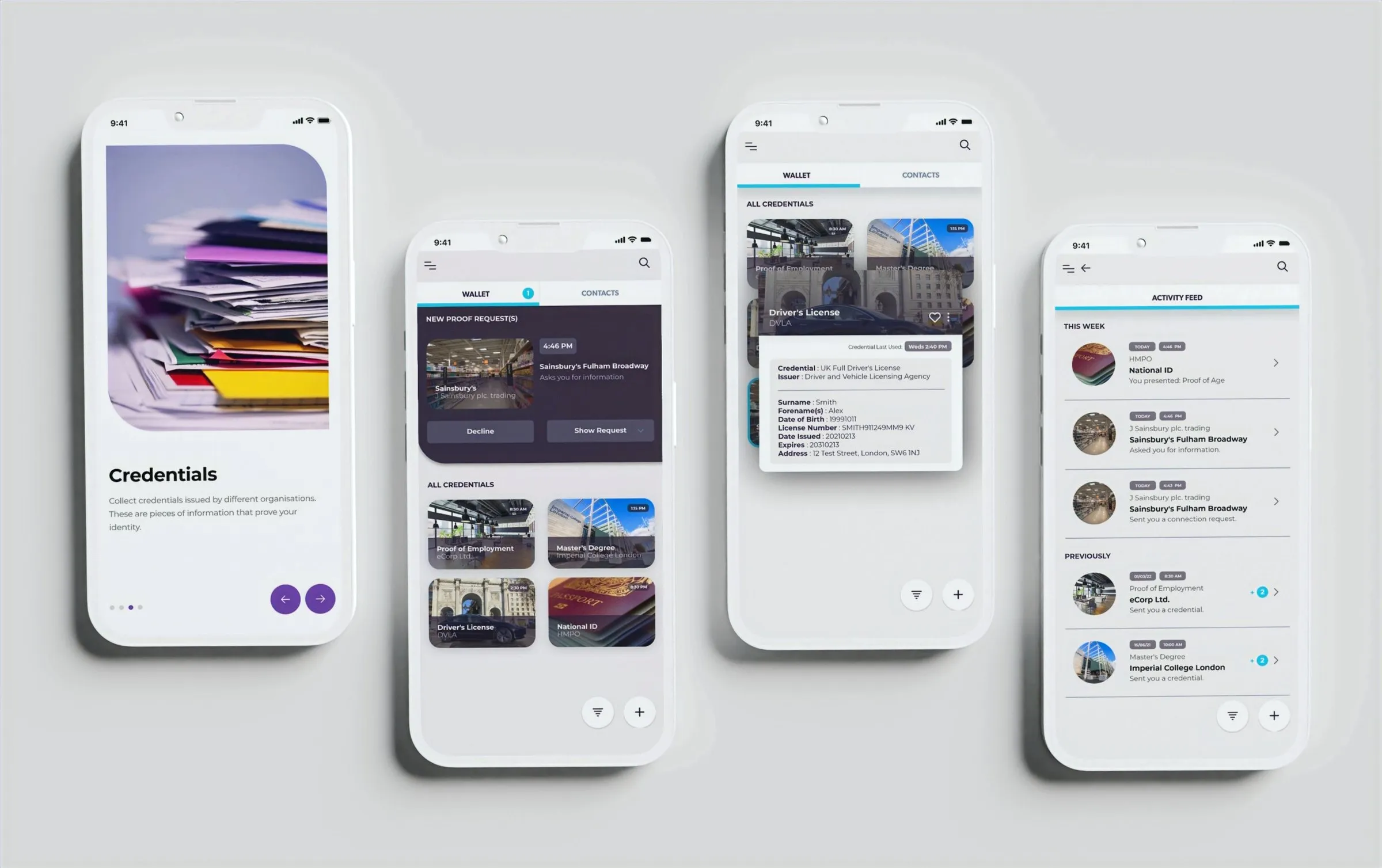
The Adobe XD wallet-app prototype used in Study 1
Study 1 · The software
Could people manage their identity with a hard wallet?
Could people manage their identity with a wallet app that controls the hard wallet? Participants completed five tasks, from accepting a connection to choosing which credentials to sync.
4.3 / 5
average rating: the instructions and prompts were helpful
4.1 / 5
average rating: information was clear and understandable
94%
average score on the workflow knowledge check
Familiarity helps
The navigation felt intuitive. Six people commented on the card-style credentials; one compared them to Apple Pay.
Learn on the go
Learnability was the weakest area. The fix: brief onboarding, and tooltips at the moment people need them.
Add friction where it matters
Deleting a credential caused the most uncertainty. Irreversible actions need stronger barriers and more reassurance.
Study 1 showed the software side was workable. But a hard wallet only earns its place if the physical object changes how people feel about their credentials. Study 2 tested exactly that.
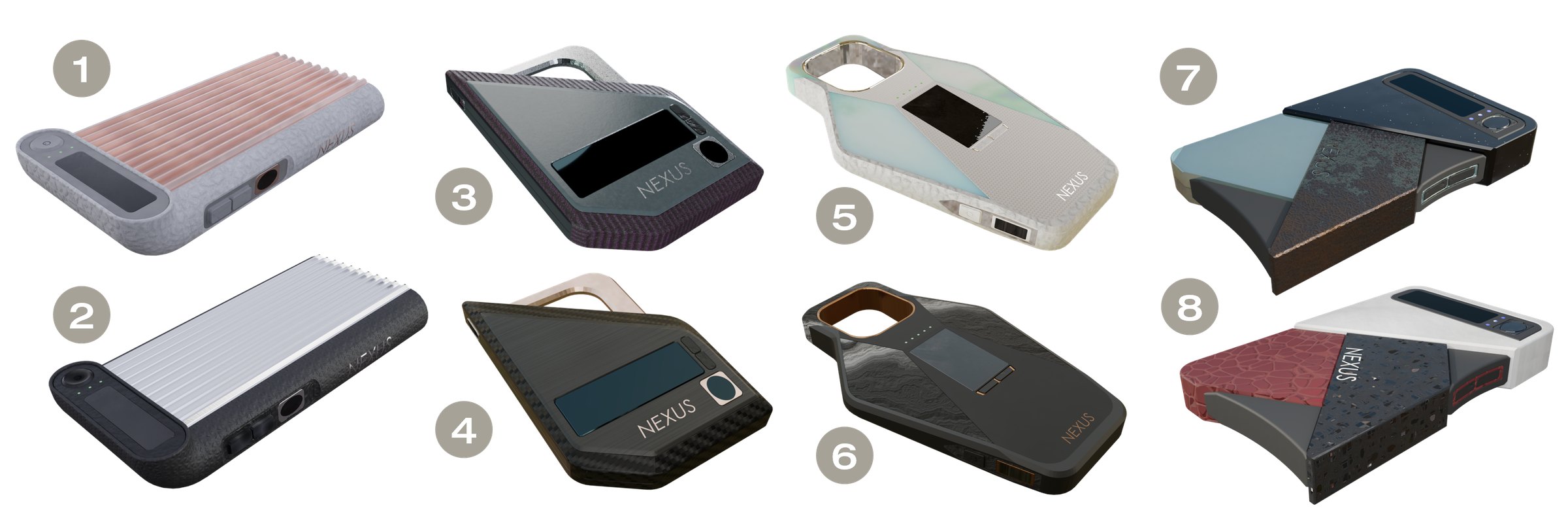
The eight looks-like renders participants ranked in Study 2
Study 2 · The object
Do people feel more attached to physical wallets?
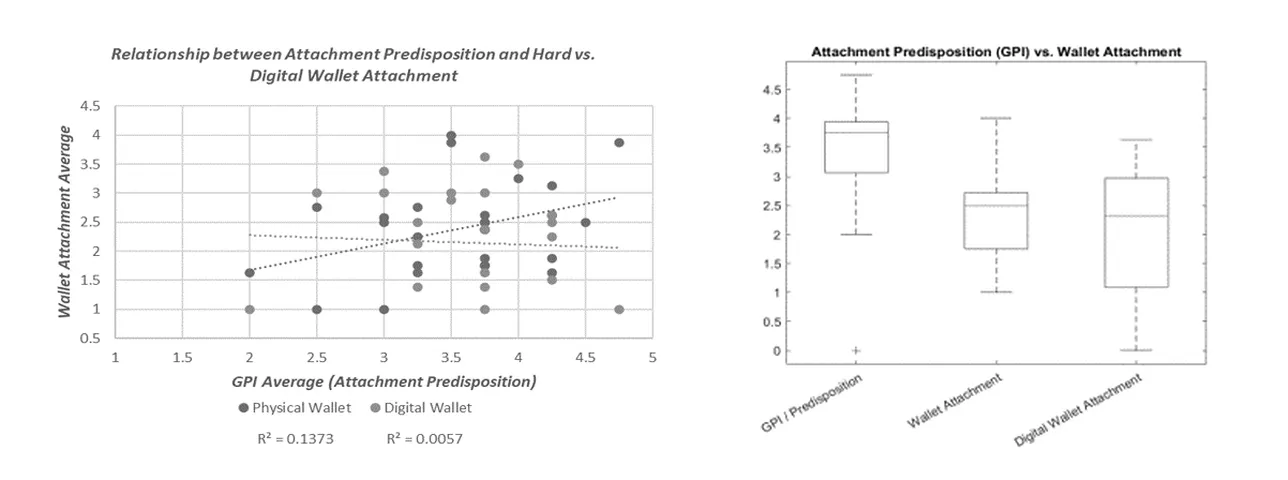
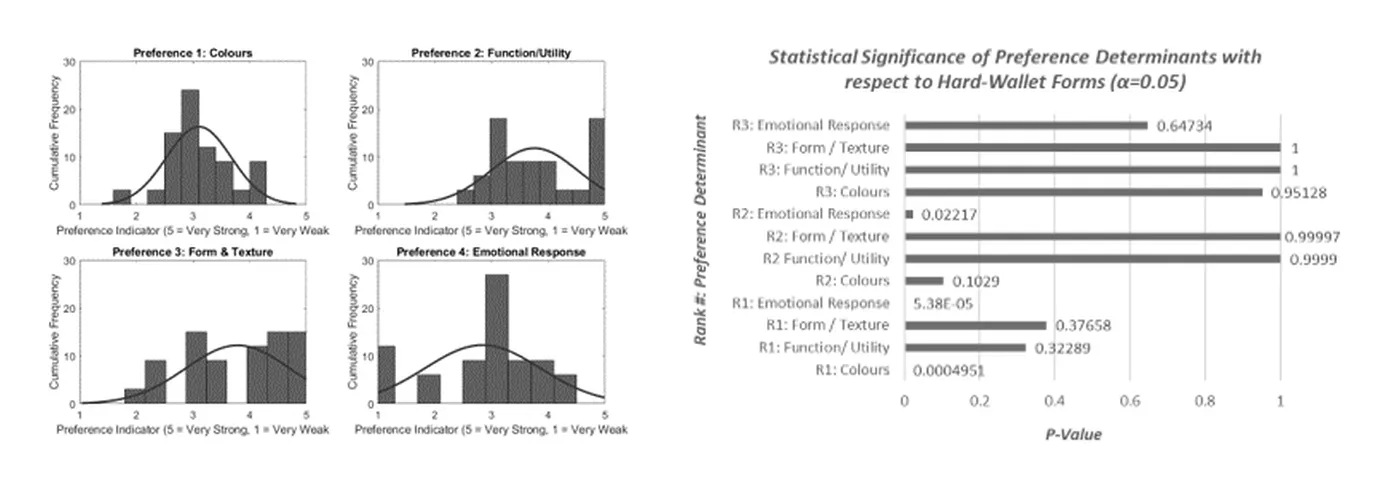
Do people feel more attached to physical wallets than digital ones, and could a hard wallet's design build that attachment? Participants rated their own wallets and ranked eight hard-wallet forms.
Physical > digital
attachment was significantly stronger for physical wallets
p < 0.01
utility was the only significant driver of wallet attachment
p < 0.01
colour and emotional response drove people's favourite design
Enjoyment narrowly missed significance (p = 0.053). Attachment to wallets overall was weaker than to possessions in general, suggesting it comes from function rather than sentiment.
See the data behind Study 2
What it showed
The project validated two things:
- The hard wallet approach shows promise for usability. Pairing it with existing wallet apps helped people understand how credential exchange works and manage their identity more smoothly.
- Physicality matters. Physical wallets build significantly stronger attachment than digital ones, and a device’s look can draw people in emotionally, while its function builds attachment over time.
Evaluating the wider impact
An adapted STEEP analysis of what could change if the hard wallet were made.
Social
- Greater transparency about how third parties share and use data
- A stronger sense of ownership of, and responsibility for, digital credentials
- More accessible decentralised identity
Technological
- A way to back up and recover digital credentials without seed phrases
- New models for connecting and interacting with third parties
- Prompts discussion of algorithmic consent as a fix for consent fatigue
Political and legal
- Less identity fraud and fewer verification errors as decentralised identity is adopted
- Urgency for new initiatives to develop, monitor and standardise SSI technologies
Environmental
- Blockchain demand could work against climate goals, because verification is energy-intensive
- Environmental benefits of a paperless society
Limitations and next steps
- SSI was unfamiliar to every participant, and there was no physical prototype to test, so the usability findings are early signals.
- Study 2 measured attachment to wallets, not to the credentials inside them.
- A planned study on how the hard wallet might speed up SSI adoption was dropped for time.
Next steps would be testing a working physical prototype, measuring attachment to credentials themselves, and exploring network effects.